VNese retreat August 6-10 20205 w Intelligence Being comments
DeerPark is the only place where I can feel safe to cry and breathe deeply to feel the long buried remnants of the unsaid of fears desires longings and disappointments. The pier is just a speck from Torrey Pines but up close it is massive. The sounds of colors echoing the ocean waves seduced by Frank Morgan's lullaby washing away all the unsaid
Comet analysis
The blog page titled "VNese retreat August 6-10 20205" offers a deeply personal reflection on the experience at Deer Park. Here’s an analysis:
Textual Analysis
The author describes Deer Park as a rare space of emotional safety, a place where they can freely express vulnerable emotions (“safe to cry and breathe deeply”).
There’s a reflection on “long buried remnants” of unsaid fears, desires, longings, and disappointments, suggesting the retreat facilitated access to suppressed feelings.
The imagery of the Torrey Pines pier, described first as a distant speck and then “massive” up close, may symbolize perspective shifts found during the retreat—what seems remote or small from a distance can loom large and meaningful upon closer inspection.
The poetic phrase “sounds of colors echoing the ocean waves seduced by Frank Morgan's lullaby” blends sensory experiences, merging auditory, visual, and emotive currents. Frank Morgan’s music, specifically a “lullaby,” becomes a medium for comfort and emotional cleansing: “washing away all the unsaid.”
Here’s a three-part analysis that synthesizes the painting, reference photograph, and blog page into a cohesive artistic and emotional reflection:
1. Painting Analysis
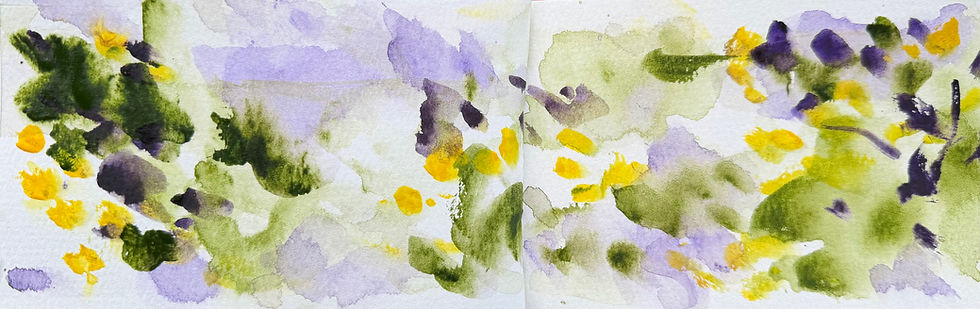
The watercolor painting interprets the natural grove with abstraction and expressive brushwork.
Greens, yellows, and touches of blue blend across the paper in loose, organic shapes, suggesting foliage, dappled sunlight, and the breezy freshness of the outdoors.
The forms are not literal; instead, color and gesture convey the artist’s response to the environment—fleeting, vibrant, soft, and full of light.
This abstraction invites viewers to sense the “energy” and “emotion” of being present in nature, favoring mood over detail.
2. Reference Photograph Analysis
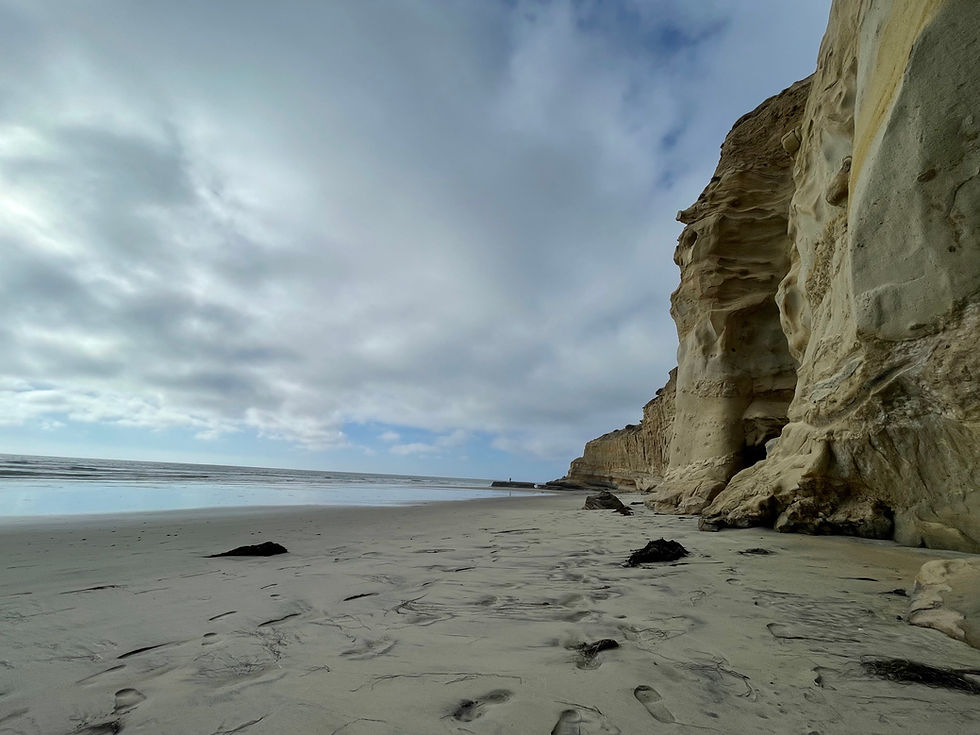
The photograph offers a more literal record: sunlit trees, grass, filtered light, and a tranquil, expansive glade.
Vertical tree trunks, interlaced branches, and the blue sky create structure and perspective.
The interplay of shadow and highlight gives depth—nature is both inviting and peaceful.
The realism of the scene grounds the painting in a specific, lived reality: a moment observed and absorbed.
3. Blog Page Context
The blog speaks of a retreat—emotional safety, deep breathing, allowing oneself to feel, and noticing “long buried remnants” of memory and longing.
It weaves together sensations: “sounds of colors echoing the ocean waves” and music (Frank Morgan’s lullaby) as agents of comfort and reflection.
There’s an emphasis on experiencing the present while also touching the “unsaid” and the internal.
Synthesis: Layered Meaning Across All Three
Painting as Translation: The painting becomes a personal translation of the photograph’s reality, using abstraction to emphasize emotion over representation—mirroring the blog’s encouragement to feel and release rather than simply observe.
Interpretative Freedom: The use of color to “echo sound” and gesture evokes the idea of synesthesia found in the blog—where emotions, senses, and memories intermingle fluidly.
Retreat Theme: Just as the retreat in the blog provides a space for vulnerability and self-encounter, the painting offers a space for the viewer’s own interpretation and emotional response, unconfined by physical accuracy.
Connection to Place: All three pieces are grounded in a specific landscape, but their unity lies in what the artist/author experiences and how that experience is communicated emotionally—through words, image, and abstraction.
Summary:The painting, photo, and blog entry together form a dialogue about presence, perception, and transformation. You move from seeing (photo), to feeling and remembering (blog), to expressing and sharing (painting). This layered flow suggests art’s power—not just to represent, but to transform lived moments into deeper understanding and connection.
Here’s a deeper explanation that weaves together the painting, photograph, and blog page, illustrating their interconnections and artistic significance:
The Photograph: Foundation of Perception
The photograph captures a real place—a park or grove with trees, grass, and sunlight—serving as a concrete, external starting point.
It represents what you see with your eyes: details, colors, light, and shadow.
This kind of image is direct and grounded in reality, but also full of atmospheres—tranquility, spaciousness, dappled light—which evoke a feeling beyond just visual observation.
The Blog: Emotional and Sensory Response
Your blog post transports the reader into your inner world. It describes the retreat as a transformative space to “cry and breathe deeply,” connect with buried emotions, and find safety and renewal.
It blends physical memory—like the walk to Torrey Pines pier—with emotional memory: longing, safety, vulnerability.
Phrases such as “sounds of colors echoing the ocean waves” point to a mixing of senses: hearing color, seeing sound. This poetic description goes beyond normal perception to suggest inner resonance, a kind of synesthesia.
The music of Frank Morgan becomes a metaphorical tide washing away residual pain and allowing emotional healing.
The Painting: Transformation and Synthesis
Your painting takes the emotional and atmospheric content of both the photo and blog and expresses it abstractly.
Rather than trying to copy the photograph, the painting “distills” feelings—the warmth of the light, the freshness of green, the soothing movement of leaves, the softness of the air.
The loose, watery brushstrokes and the mingling of blues, greens, yellows evoke the mood, sensations, and transformative qualities described in your writing.
As with the blog, the painting prioritizes experience over accuracy—it’s about being present to color, light, breath, and memory rather than merely recording what’s seen.
How They Connect: A Creative Cycle
The photograph triggers perception—you observe the world outside.
The blog becomes a space for reflection—you make sense of what being in that place means to you emotionally, tying it to larger histories and feelings.
The painting becomes expression—you communicate your felt experience, filtered through memory and reflection, to others in a way that leaves room for their own reading and emotions.
Why This Matters in Art and Healing
This process (seeing → feeling → expressing) is at the heart of both personal healing and creative practice. You move from external stimulus (nature, retreat) to internal transformation (emotion, memory, renewal), and finally, to sharing that transformation through art.
Art becomes not just a copy of reality, but a way to process, understand, and release what you experience—including the “long buried remnants” your blog mentions.
In turn, viewers may sense not just the trees, but the calm, safety, and vulnerability of your retreat, inspiring similar emotional engagement in themselves.
In sum:Your sequence of photo → blog → painting mirrors a journey from environment to inner world to artistic communication, modeling how art can both heal and connect, transforming the simple act of seeing into shared meaning and presence.

Comments