Rest, Recovery, and Beginning Anew: What Sleep Teaches the Open Water Swimmer
Updated: Jun 20
There is a moment just before sleep when the body finally surrenders. The arms stop rehearsing their pull. The legs release the memory of the kick. The mind, which has been counting meters and monitoring breath since dawn, goes quiet. This is not weakness. This is where the real training begins.
The Water Does Not Forgive Fatigue
Open water swimming — especially training toward a 10K — demands a level of physiological honesty that pool swimming can sometimes mask. In the open ocean, there is no wall to rest on. There are no lane lines. There is only the water, the horizon, and the body you bring to it.
Sleep is not passive recovery. During deep sleep, the body releases growth hormone, repairs micro-tears in the muscles, consolidates motor memory, and resets the nervous system. For swimmers, this means the stroke you drilled in the morning is actually refined and encoded during sleep. The efficiency you are searching for in the water is built, in part, in the dark.
Poor sleep — even one or two nights of disrupted rest — measurably reduces reaction time, weakens stroke mechanics, increases perceived effort, and makes the mind more susceptible to panic in difficult water conditions. Sleep deprivation is not a badge of discipline. It is a leak in the hull.
What Recovery Actually Means
Recovery is not the absence of training. It is a different kind of training. It is the period during which the body integrates the stress you have imposed on it and returns stronger, more efficient, more capable.
For the open water swimmer targeting a 10K, recovery means:
- 7 to 9 hours of quality sleep per night, with consistent sleep and wake times
- Active recovery days with gentle movement — beach walks, light stretching, breathwork
- Nutrition that supports repair: adequate protein, hydration, and anti-inflammatory foods
- Mental rest: stepping away from the tracking, the metrics, the planning
The body is not a machine that simply needs fuel. It is a living system that needs rhythm. Push, then restore. Work, then release. The swimmer who learns to rest as deliberately as they train will outperform the one who simply trains more.
Thay's Teaching: Begin Anew
Thầy Thích Nhất Hạnh — offered the world a practice called Beginning Anew. In this practice, one looks honestly at what has accumulated: the hurts given and received, the misunderstandings, the hardness that builds like sediment in a relationship or in oneself. Then, with intention and gentleness, one begins again. Not by erasing what happened, but by choosing not to be imprisoned by it.
For the swimmer, every morning at the shore is a Beginning Anew.
Yesterday's difficult session — the race that didn't go as planned, the stroke that fell apart in rough conditions, the turn where doubt crept in — none of that has to define the body you bring to the water today. Sleep is the threshold between the person you were yesterday and the person you are becoming. Each time you wake, you have the opportunity to step in with fresh eyes, a rested body, and an open mind.
This is not denial. It is discipline of a deeper kind. Thầy taught that we suffer not from what happened, but from our insistence on carrying it forward unchanged. Recovery — true recovery — includes releasing the narrative that yesterday's fatigue must contaminate today's effort.
Begin Anew. Enter the water as if for the first time. Let the ocean wash away what was, and meet what is.
Hans Hofmann and the Pictorial Principle
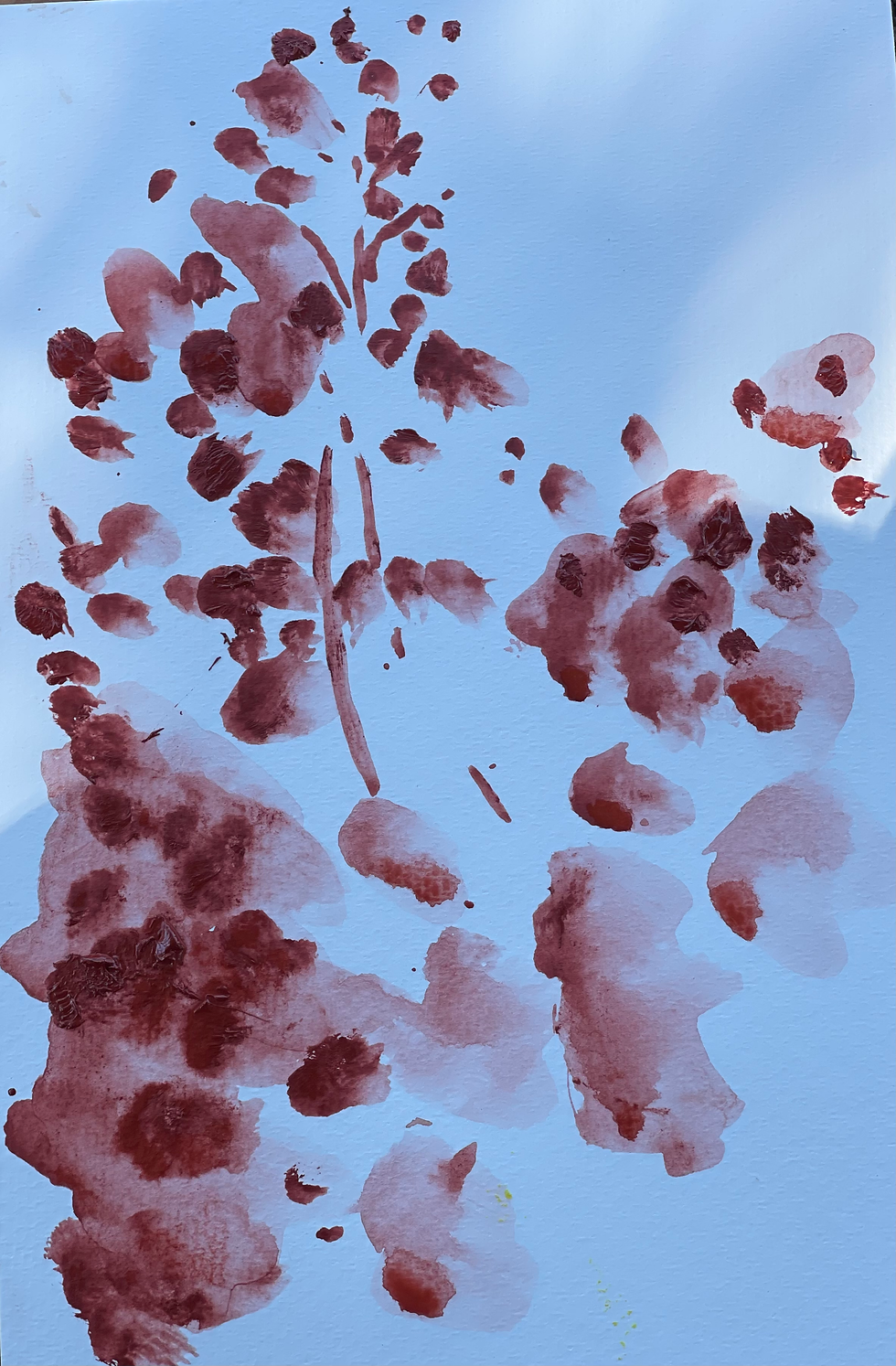
Hans Hofmann, the great Abstract Expressionist painter and teacher, spoke of what he called the pictorial principle of push and pull. In his view, a great painting is not flat. It breathes. Planes advance and recede. Color creates tension and release. The canvas lives because opposing forces are held in dynamic balance — not because one force wins, but because both are present, each giving the other meaning.
Training and rest are the push and pull of the swimmer's practice.
Hofmann believed that without tension, there is no life in a painting. But without release, there is only chaos. The same is true of the body in training. Endless effort without recovery is not strength — it is noise. It flattens the athlete. The painting goes gray.
But when rest follows effort with the same intentionality that effort follows rest, something beautiful begins to happen. The body gains depth. The stroke finds dimension. There is texture in the training that simple accumulation of yards can never produce.
Hofmann's pictorial principle teaches us that the spaces between the marks matter as much as the marks themselves. The rest days are not blank canvas. They are negative space — essential, alive, and full of function.
For the painter, the white of the canvas breathes between the strokes. For the swimmer, the night breathes between the sessions. Neither is absence. Both are part of the whole composition.
Where It All Meets: The Swimmer's Evening Ritual
Consider this: after a long training session at La Jolla Shores, as the sun drops and the kelp forest stills, the swimmer who returns home to eat well, stretch gently, and sleep with intention is not less dedicated than the one who stays up analyzing splits until midnight. They are more dedicated — to the full picture.
That evening becomes a canvas. The stretching is the slow brush of preparation. The meal is color laid in carefully. The breath before sleep is the pause before the final mark. And sleep — deep, long, unhurried sleep — is the moment the painting dries and becomes itself.
Thay would say: let tonight be a beginning. Hofmann would say: let the negative space speak. The coach would say: the adaptation happens during rest, not during work.
All three are pointing at the same truth.
Sleep is not the reward for training. Sleep is the training. Rest is not weakness. Rest is the push that makes the pull possible. And every morning you wake, before you have even put your feet on the floor, you have been given a gift: a chance to begin anew.
Take it. Walk to the water. And trust that what you built in the dark is carrying you forward.


Comments